Looking for a cloud platform that delivers unmatched scalability, security, and innovation? msft azure is your ultimate solution. Trusted by enterprises worldwide, it combines cutting-edge technology with seamless integration—making cloud computing smarter, faster, and more reliable than ever before.

What Is msft azure and Why It Matters

Microsoft Azure, commonly referred to as msft azure, is one of the leading cloud computing platforms in the world. Launched in 2010, it has evolved into a comprehensive ecosystem offering over 200 services, including computing, storage, networking, analytics, and artificial intelligence. Unlike traditional on-premise infrastructure, msft azure enables businesses to scale dynamically, reduce operational costs, and accelerate digital transformation.
The platform operates on a global network of data centers managed by Microsoft, ensuring high availability and compliance with international standards such as GDPR, HIPAA, and ISO 27001. This makes msft azure not just a technological choice, but a strategic business decision for organizations aiming to stay competitive in a digital-first economy.
Core Components of msft azure
At its foundation, msft azure is built on three primary service models: Infrastructure as a Service (IaaS), Platform as a Service (PaaS), and Software as a Service (SaaS). These models allow businesses to choose how much control they want over their environments—from managing virtual machines (IaaS) to deploying applications without worrying about underlying infrastructure (PaaS).
- Compute: Virtual Machines, Azure Kubernetes Service (AKS), and Azure Functions enable flexible computing power.
- Storage: Blob Storage, Disk Storage, and Data Lake provide scalable and secure data solutions.
- Networking: Virtual Networks, Load Balancers, and Azure DNS ensure reliable and fast connectivity.
Each component integrates seamlessly, allowing developers and IT professionals to build, deploy, and manage applications efficiently. For more details, visit the official Microsoft Azure website.
Global Reach and Data Center Infrastructure
One of the standout features of msft azure is its global footprint. With over 60 regions worldwide—and growing—it offers one of the most extensive cloud infrastructures available. This geographic distribution allows companies to deploy applications closer to their users, reducing latency and improving performance.
Each region consists of multiple data centers connected via high-speed networks, ensuring redundancy and fault tolerance. Microsoft also invests heavily in sustainability, aiming for 100% renewable energy usage across its data centers by 2025. This commitment not only supports environmental goals but also appeals to eco-conscious enterprises.
“Azure’s global scale enables our applications to run reliably across continents with minimal downtime.” — IT Director, Fortune 500 Company
Key Benefits of Using msft azure
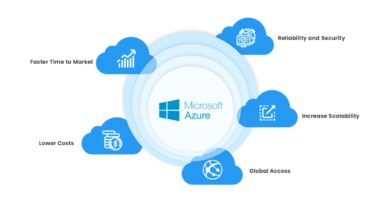
Adopting msft azure brings a wide array of advantages that go beyond basic cloud hosting. From cost efficiency to advanced AI capabilities, the platform empowers businesses to innovate faster and operate smarter. Whether you’re a startup or a multinational corporation, msft azure adapts to your needs.
Its pay-as-you-go pricing model eliminates the need for large upfront investments in hardware. Instead, organizations only pay for the resources they consume, making budgeting more predictable and scalable. Additionally, built-in monitoring tools like Azure Monitor and Azure Advisor help optimize performance and reduce unnecessary spending.
Cost Efficiency and Flexible Pricing Models
One of the most compelling reasons to adopt msft azure is its financial flexibility. The platform offers several pricing tiers, including pay-as-you-go, reserved instances, and spot pricing, allowing businesses to tailor their spending based on usage patterns.
For example, reserved instances can save up to 72% compared to on-demand pricing for workloads with predictable usage. Meanwhile, spot VMs allow users to run non-critical tasks at significantly reduced rates by utilizing unused capacity. This level of customization ensures that even small businesses can leverage enterprise-grade infrastructure without breaking the bank.
Azure Cost Management + Billing provides real-time insights into spending, helping teams identify underutilized resources and optimize cloud usage. This transparency is crucial for maintaining financial control in complex cloud environments.
Scalability and Performance Optimization
msft azure excels in scalability, allowing applications to automatically scale up or down based on demand. This is particularly useful for businesses experiencing seasonal traffic spikes or rapid growth.
Using Azure Autoscale, organizations can define rules based on metrics like CPU usage, memory consumption, or queue length. When thresholds are met, additional instances are provisioned automatically, ensuring consistent performance during peak loads.
Additionally, Azure Content Delivery Network (CDN) caches content at edge locations around the world, delivering web assets faster to end-users. Combined with Azure Front Door for global load balancing, this ensures high availability and low-latency access to applications.
Security and Compliance in msft azure
In today’s threat landscape, security is non-negotiable. msft azure provides a robust, multi-layered security framework designed to protect data, applications, and infrastructure from cyber threats. Microsoft invests over $1 billion annually in cybersecurity research and development, ensuring that msft azure remains at the forefront of digital defense.
The platform includes built-in tools like Azure Security Center (now part of Microsoft Defender for Cloud), which continuously monitors for vulnerabilities and provides actionable recommendations. It also supports Zero Trust security principles, requiring strict identity verification for every user and device accessing the network.
Advanced Threat Protection and Identity Management
msft azure integrates tightly with Microsoft Entra ID (formerly Azure Active Directory), providing centralized identity and access management. This allows organizations to enforce multi-factor authentication (MFA), conditional access policies, and single sign-on (SSO) across thousands of applications.
Microsoft Defender for Cloud extends protection to hybrid and multi-cloud environments, offering threat detection for servers, containers, and databases. It uses AI-driven analytics to detect anomalies and potential breaches in real time, significantly reducing response times.
For example, if an unusual login attempt is detected from a foreign country, Defender can automatically block the access and alert administrators—preventing potential data exfiltration.
Compliance and Regulatory Standards
msft azure complies with more than 140 international and industry-specific standards, making it suitable for highly regulated sectors such as finance, healthcare, and government.
- GDPR (General Data Protection Regulation) for data privacy in the EU
- HIPAA (Health Insurance Portability and Accountability Act) for healthcare data
- ISO/IEC 27001, 27017, and 27018 for information security management
- SOC 1, SOC 2, and SOC 3 for financial reporting and auditing
These certifications are regularly audited by third parties, ensuring that msft azure meets the highest levels of compliance. Customers can access compliance reports through the Microsoft Trust Center.
“Choosing msft azure gave us the confidence that our customer data is protected under the strictest regulatory frameworks.” — CISO, Financial Services Firm
Integration with Microsoft Ecosystem and Hybrid Cloud
One of msft azure’s greatest strengths is its seamless integration with the broader Microsoft ecosystem. Whether you’re using Microsoft 365, Dynamics 365, or Windows Server, msft azure enhances functionality and simplifies management.
This tight integration reduces complexity and training overhead, enabling faster adoption and smoother transitions to the cloud. For organizations already invested in Microsoft products, this synergy translates into immediate productivity gains and lower total cost of ownership (TCO).
Hybrid Cloud Capabilities with Azure Arc
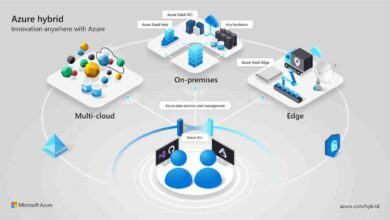
Not all workloads can move to the public cloud immediately. That’s where msft azure’s hybrid cloud solutions shine. Azure Arc allows organizations to manage on-premises servers, edge devices, and multi-cloud environments using the same tools and policies as native Azure resources.
With Azure Arc, IT teams can apply consistent governance, security policies, and automation across all environments. This unified control plane simplifies operations and improves compliance, especially for distributed enterprises.
For instance, a retail chain can use Azure Arc to deploy and update point-of-sale systems across hundreds of stores from a central dashboard, ensuring consistency and reducing downtime.
Synergy with Microsoft 365 and Dynamics 365
msft azure powers many backend services for Microsoft 365 and Dynamics 365. This deep integration enables advanced features like AI-driven insights, real-time collaboration, and secure file sharing.
For example, SharePoint Online and OneDrive for Business rely on Azure storage and networking to deliver fast, reliable access to documents. Similarly, Power BI uses Azure data services to process and visualize large datasets in real time.
Organizations can also extend these platforms using Azure Functions and Logic Apps, creating custom workflows that automate business processes across departments.
Innovation and Artificial Intelligence in msft azure
msft azure isn’t just about infrastructure—it’s a platform for innovation. With built-in AI and machine learning tools, developers can create intelligent applications without needing deep expertise in data science.
From natural language processing to computer vision, msft azure provides pre-built APIs and customizable models that accelerate development cycles and bring AI capabilities to mainstream applications.
Azure Cognitive Services and AI APIs
Azure Cognitive Services offer a suite of ready-to-use AI APIs that can be integrated into applications with minimal code. These include:
- Computer Vision: Analyze images, detect objects, and extract text.
- Text Analytics: Detect sentiment, key phrases, and language in text.
- Speech Services: Convert speech to text and vice versa, with support for multiple languages.
- Translator: Real-time translation for text and speech.
These services are used by companies to build chatbots, enhance customer support, and automate content moderation. For example, a media company might use Computer Vision to automatically tag thousands of images in their archive.
Explore the full range of Cognitive Services at Azure AI Services.
Machine Learning with Azure Machine Learning Studio
For more advanced use cases, msft azure offers Azure Machine Learning—a cloud-based environment for training, deploying, and managing machine learning models.
Data scientists can use drag-and-drop interfaces or write code in Python or R to build models. The platform supports automated ML (AutoML), which tests multiple algorithms and hyperparameters to find the best-performing model.
Once trained, models can be deployed as web services and integrated into applications via REST APIs. This makes it easy to embed predictive analytics into business workflows, such as forecasting sales or detecting fraud.
“Azure Machine Learning cut our model development time by 60%. It’s a game-changer.” — Data Science Lead, Tech Startup
DevOps and Application Development on msft azure
msft azure provides a powerful suite of tools for modern software development and DevOps practices. From continuous integration/continuous deployment (CI/CD) to containerization and serverless computing, the platform supports agile development at scale.
Teams can collaborate efficiently using Azure DevOps, which includes project management, source control, CI/CD pipelines, and testing tools—all in one integrated environment.
Azure DevOps and CI/CD Pipelines
Azure DevOps enables development teams to automate the entire software delivery process. With CI/CD pipelines, code changes can be automatically built, tested, and deployed to staging or production environments.
This reduces manual errors, speeds up release cycles, and improves software quality. Teams can also integrate with GitHub, Jenkins, or other tools, making it flexible for diverse workflows.
For example, a fintech company can use Azure Pipelines to deploy updates to its mobile banking app every night, ensuring new features are tested and released quickly.
Containerization with Azure Kubernetes Service (AKS)
Containers have become the standard for deploying microservices-based applications. msft azure supports container orchestration through Azure Kubernetes Service (AKS), a managed Kubernetes solution that simplifies cluster management.
AKS handles critical tasks like scaling, upgrades, and health monitoring, allowing developers to focus on writing code. It also integrates with Azure Monitor and Azure Policy for observability and governance.
Organizations use AKS to run everything from e-commerce platforms to AI inference engines, benefiting from high availability and efficient resource utilization.
Real-World Use Cases and Industry Applications of msft azure
msft azure is not just a theoretical platform—it’s actively transforming industries worldwide. From healthcare to manufacturing, organizations are leveraging its capabilities to solve real-world challenges and drive innovation.
These use cases demonstrate how msft azure can be tailored to specific business needs, delivering measurable outcomes in terms of efficiency, customer experience, and revenue growth.
Healthcare: Secure Data Sharing and Telemedicine
Hospitals and clinics use msft azure to store and analyze electronic health records (EHRs) securely. Azure Health Data Services enable interoperability between systems, allowing doctors to access patient data across facilities.
Telemedicine platforms built on msft azure can scale during peak hours, ensuring patients can connect with doctors without delays. AI-powered tools also assist in diagnosing conditions from medical imaging.
Retail: Personalized Customer Experiences
Retailers leverage msft azure to analyze customer behavior and deliver personalized recommendations. By processing data from online stores, mobile apps, and in-store sensors, companies can create targeted marketing campaigns.
For example, a global fashion brand uses Azure Stream Analytics to track inventory in real time and optimize supply chain logistics, reducing stockouts by 30%.
Manufacturing: Predictive Maintenance and IoT Integration
Manufacturers deploy msft azure with Azure IoT Hub to monitor equipment health and predict failures before they occur. Sensors on machines send data to the cloud, where AI models analyze patterns and trigger maintenance alerts.
This reduces unplanned downtime and extends the lifespan of critical machinery. A leading automotive plant reported a 25% reduction in maintenance costs after implementing Azure IoT solutions.
What is msft azure?
msft azure is Microsoft’s cloud computing platform that provides a wide range of services including computing, storage, networking, AI, and analytics. It enables businesses to build, deploy, and manage applications across a global network of data centers.
How does msft azure compare to AWS?
While both msft azure and Amazon Web Services (AWS) are top-tier cloud platforms, msft azure excels in hybrid cloud integration, enterprise support, and seamless connectivity with Microsoft products like Windows Server and Microsoft 365. AWS has a larger market share, but msft azure is growing rapidly, especially in regulated industries.
Is msft azure secure?
Yes, msft azure is highly secure, offering advanced threat protection, identity management, and compliance with over 140 regulatory standards. Microsoft invests heavily in cybersecurity, and its shared responsibility model ensures both the platform and customers play a role in maintaining security.
Can I use msft azure for AI and machine learning?
Absolutely. msft azure provides powerful AI tools like Azure Cognitive Services and Azure Machine Learning, enabling developers to build intelligent applications with natural language processing, computer vision, and predictive analytics.
What are the pricing models for msft azure?
msft azure offers flexible pricing, including pay-as-you-go, reserved instances (for long-term commitments), and spot pricing (for non-critical workloads). Azure Cost Management tools help monitor and optimize spending.
In conclusion, msft azure stands as a transformative force in modern cloud computing. Its combination of global reach, robust security, seamless integration with Microsoft products, and cutting-edge AI capabilities makes it an ideal choice for businesses aiming to innovate and scale. Whether you’re migrating legacy systems, building new applications, or harnessing the power of data and AI, msft azure provides the tools and infrastructure to succeed. As digital transformation accelerates, adopting msft azure isn’t just an option—it’s a strategic imperative for future-ready organizations.
Further Reading: