Want to calculate Azure costs accurately and stop overspending? You’re not alone. Many businesses struggle with unpredictable cloud bills. In this guide, we’ll break down everything you need to know to gain full control over your Microsoft Azure expenses—using smart tools, real-time tracking, and expert strategies.


Calculate Azure Costs: Why It’s Crucial for Business Success

Understanding how to calculate Azure costs isn’t just about saving money—it’s about making smarter business decisions. Cloud computing offers flexibility and scalability, but without proper cost management, your monthly bill can spiral out of control. Microsoft Azure provides a wide array of services—from virtual machines to AI platforms—and each comes with its own pricing model. Without a clear strategy, it’s easy to lose track of where your money is going.
Hidden Costs in Azure You Might Be Overlooking
Many organizations focus only on headline services like VMs or storage but miss the hidden charges that add up quickly. These include:
- Data egress fees (costs for transferring data out of Azure)
- Network bandwidth usage between regions
- Backup and disaster recovery storage
- Management tools like Azure Monitor or Log Analytics
- Licensing fees for third-party software on Azure Marketplace
For example, transferring just 10 TB of data out of Azure per month can cost over $500 depending on the destination region. These costs aren’t always obvious during initial deployment, which is why proactive cost analysis is essential.
Impact of Poor Cost Management on ROI
When you fail to calculate Azure costs accurately, your return on investment (ROI) suffers. A 2023 Flexera report found that 32% of cloud spending is wasted due to underutilized resources and lack of governance. This means nearly one-third of your Azure budget could be going toward idle VMs, orphaned disks, or over-provisioned databases.
“Organizations that implement cloud cost optimization strategies see up to 40% reduction in their cloud bills within the first year.” — Gartner, 2023
By not monitoring usage patterns and rightsizing resources, companies unknowingly pay for capacity they don’t use. This directly impacts profitability and limits funds available for innovation.
How to Calculate Azure Costs Using the Total Cost of Ownership (TCO) Model
One of the most effective ways to calculate Azure costs is by using the Total Cost of Ownership (TCO) model. This approach compares on-premises infrastructure costs with cloud-based solutions, helping you understand long-term financial implications.
calculate azure costs – Calculate azure costs menjadi aspek penting yang dibahas di sini.
What Is the Azure TCO Calculator?
The Azure TCO Calculator is a free tool provided by Microsoft that helps estimate potential savings when migrating from on-premises data centers to Azure. It considers factors like hardware depreciation, power consumption, cooling, physical space, IT labor, and software licensing.
You input details about your current environment—number of servers, storage capacity, network usage, etc.—and the tool generates a detailed report showing projected five-year costs for both on-premises and Azure deployments.
Step-by-Step Guide to Using the TCO Calculator
Here’s how to get the most out of the Azure TCO Calculator:
- Step 1: Visit https://azure.microsoft.com/en-us/pricing/tco-calculator/
- Step 2: Select your scenario: Consolidate datacenters, migrate to public cloud, or extend existing datacenter
- Step 3: Enter information about your current infrastructure (servers, storage, networking, labor costs)
- Step 4: Adjust assumptions like inflation rate, power cost per kWh, and labor hourly rates
- Step 5: Review the side-by-side comparison of on-premises vs. Azure costs over 5 years
The output includes visual charts and downloadable reports, making it easy to present findings to stakeholders.
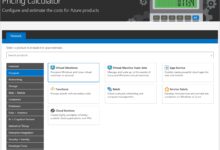
Use Azure Pricing Calculator to Estimate Future Costs
Before deploying any new service, it’s wise to estimate its cost. The Azure Pricing Calculator is an essential tool for forecasting expenses based on your intended configuration.
Building a Custom Cost Estimate
The Azure Pricing Calculator allows you to build a custom environment by selecting specific services. For instance, if you’re planning to deploy a web application, you can add:
- Virtual Machines (e.g., B2s, D4s_v3)
- App Services (Standard or Premium tier)
- SQL Database (Basic, Standard, or Premium)
- Storage Accounts (Standard HDD or SSD)
- Bandwidth (data transfer in/out)
- Load Balancer and Application Gateway
As you configure each component, the calculator updates the total estimated monthly cost in real time. You can also apply reserved instances or spot pricing discounts to see potential savings.
calculate azure costs – Calculate azure costs menjadi aspek penting yang dibahas di sini.
Exporting and Sharing Your Estimates
Once your estimate is complete, you can export it as a CSV file or share a direct link with team members. This feature is particularly useful for cross-functional planning between development, operations, and finance teams.
You can save multiple scenarios (e.g., development, staging, production) and compare them later. This helps identify cost-efficient architectures before deployment.
Leverage Azure Cost Management + Billing for Real-Time Tracking
While estimation tools are helpful, real-time monitoring is critical. Azure Cost Management + Billing is a built-in service that provides deep visibility into your spending patterns.
Setting Up Cost Alerts and Budgets
One of the most powerful features of Azure Cost Management is the ability to set budgets and alerts. You can create a budget at the subscription, resource group, or even tag level.
- Define a monthly spending limit (e.g., $5,000)
- Set alert thresholds (e.g., notify when 80% of budget is reached)
- Choose notification recipients via email or Azure Monitor alerts
- Use action groups to trigger automated responses (e.g., stop non-critical VMs)
This proactive approach prevents bill shock and encourages accountability across teams.
Analyzing Cost Trends and Anomalies
The Cost Analysis dashboard lets you visualize spending over time, filter by service, location, or tags, and drill down into specific resources. You can identify anomalies—like a sudden spike in data transfer costs—and investigate root causes.
For example, if your bandwidth costs double in one week, you can filter by ‘Network’ and see which regions or services are responsible. This level of granularity is essential when you need to calculate Azure costs accurately across complex environments.
calculate azure costs – Calculate azure costs menjadi aspek penting yang dibahas di sini.
Calculate Azure Costs with Tags and Resource Grouping
Effective cost allocation starts with proper organization. Azure tags allow you to categorize resources logically, making it easier to track spending by department, project, environment, or owner.
Best Practices for Tagging Azure Resources
To maximize the value of tagging, follow these best practices:
- Use consistent naming conventions (e.g., ‘Environment: Production’, ‘Project: CRM-Migration’)
- Limit the number of tag keys to avoid complexity (5–10 is ideal)
- Enforce tagging policies using Azure Policy
- Automate tagging during deployment via ARM templates or Terraform
- Regularly audit untagged resources and apply missing tags
When done correctly, tags transform raw cost data into actionable insights. For instance, you can generate a report showing how much the Marketing team spent on Azure Functions last quarter.
Using Resource Groups for Departmental Cost Allocation
Resource groups act as containers for related resources. By organizing resources by team or project, you can easily assign costs to specific departments.
For example:
- RG-Dev-Team-A
- RG-Data-Science
- RG-Production-WebApp
Then, in Cost Management, filter by resource group to see exactly how much each team is spending. This transparency fosters better budgeting and accountability.
Optimize Costs with Reserved Instances and Spot VMs
Once you can calculate Azure costs accurately, the next step is optimization. Two of the most effective ways to reduce spending are Reserved Instances (RIs) and Spot Virtual Machines.
calculate azure costs – Calculate azure costs menjadi aspek penting yang dibahas di sini.
How Reserved Instances Save You Up to 72%
Azure Reserved VM Instances allow you to commit to using specific VM sizes for one or three years in exchange for significant discounts—up to 72% compared to pay-as-you-go pricing.
They work best for:
- Steady-state workloads (e.g., domain controllers, databases)
- Applications with predictable usage patterns
- Production environments that run 24/7
You can purchase RIs through the Azure portal or API, and they automatically apply to matching VMs in your subscription. Azure also offers Reserved Instances for other services like SQL Database, Cosmos DB, and Blob Storage.
Spot VMs: Ultra-Low-Cost Compute for Flexible Workloads
If your workloads can tolerate interruptions, Azure Spot VMs offer compute capacity at up to 90% off regular prices. These are ideal for:
- Batch processing jobs
- CI/CD pipelines
- Big data analytics
- Rendering farms
Spot VMs can be evicted when Azure needs the capacity back, so they should never be used for critical applications. However, when combined with autoscaling and checkpointing, they become a powerful cost-saving tool.
Integrate Third-Party Tools to Calculate Azure Costs More Accurately
While Azure’s native tools are robust, third-party solutions offer advanced analytics, multi-cloud support, and deeper automation.
Top Third-Party Cost Management Platforms
Several external tools enhance your ability to calculate Azure costs with greater precision:
calculate azure costs – Calculate azure costs menjadi aspek penting yang dibahas di sini.
- CloudHealth by VMware: Offers real-time cost visibility, security compliance, and performance optimization across Azure, AWS, and GCP.
- Azure Advisor Integration: While native, it pairs well with external tools to provide optimization recommendations.
- Datadog Cloud Cost Management: Combines infrastructure monitoring with cost tracking, helping correlate performance with spending.
- Spot.io (by NetApp): Automates rightsizing, reservations, and spot instance usage with AI-driven insights.
- Apptio Cloudability: Provides financial operations (FinOps) capabilities, including showback/chargeback models and forecasting.
These platforms often include features like anomaly detection, carbon footprint tracking, and integration with ERP systems.
When to Use External Tools vs. Native Azure Features
Native Azure tools are sufficient for small to mid-sized organizations with single-cloud environments. However, if you have:
- Multi-cloud deployments
- Complex chargeback requirements
- Need for predictive analytics
- Desire for automated remediation
…then investing in a third-party solution makes sense. Many of these tools offer free tiers or trials, allowing you to test before committing.
Common Mistakes When Trying to Calculate Azure Costs
Even experienced teams make errors when estimating or managing Azure spending. Recognizing these pitfalls can save you thousands.
Overprovisioning Resources “Just in Case”
A common mistake is provisioning high-spec VMs or large databases “to be safe.” This leads to massive waste. Instead, start small and scale up based on actual usage metrics from Azure Monitor.
Use the VM Right-Sizing recommendations in Azure Advisor to identify underutilized instances. For example, a VM running at 10% CPU utilization for weeks might be downsized to a cheaper tier, cutting costs by 50% or more.
Ignoring Egress and Cross-Region Data Transfer Fees
Data transfer costs are often overlooked. While inbound data is free, outbound data (egress) is charged based on volume and destination. Transferring data between Azure regions also incurs fees.
calculate azure costs – Calculate azure costs menjadi aspek penting yang dibahas di sini.
To minimize these costs:
- Cache frequently accessed content using Azure CDN
- Use compression and delta syncing for large transfers
- Avoid unnecessary replication across geographies
- Monitor data transfer logs regularly
These small adjustments can lead to big savings over time.
Failing to Clean Up Orphaned Resources
When developers delete a VM but forget to remove the associated disks, public IPs, or snapshots, those resources continue to incur charges. These “orphaned” assets can accumulate silently over months.
Solutions:
- Implement automated cleanup scripts using Azure CLI or PowerShell
- Use Azure Policy to enforce deletion rules
- Conduct monthly resource audits
- Leverage Azure Resource Graph to query unused resources
Regular housekeeping prevents what’s known as “cloud sprawl.”
How do I calculate my Azure monthly cost?
You can calculate your Azure monthly cost using the Azure Pricing Calculator. Input your planned services (VMs, storage, bandwidth, etc.), configure their specs, and the tool will estimate your monthly bill. For actual spending, use Azure Cost Management + Billing to track real-time usage and trends.
calculate azure costs – Calculate azure costs menjadi aspek penting yang dibahas di sini.
What is the difference between Azure TCO Calculator and Pricing Calculator?
The Azure TCO Calculator compares the long-term cost of running on-premises infrastructure versus moving to Azure, including indirect costs like power and labor. The Pricing Calculator, on the other hand, estimates the direct cost of specific Azure services you plan to use. Both are essential but serve different purposes—one for migration planning, the other for deployment budgeting.
How can I reduce my Azure cloud costs?
To reduce Azure costs, start by identifying underutilized resources using Azure Advisor. Purchase Reserved Instances for steady workloads (save up to 72%), use Spot VMs for non-critical tasks (save up to 90%), enable auto-shutdown for dev/test environments, and apply tags for better cost allocation. Regularly review and remove orphaned resources to prevent waste.
Can I get alerts when my Azure spending exceeds a certain amount?
Yes. Azure Cost Management allows you to set budgets and configure alerts. You can define a monthly spending threshold and receive email notifications when you reach 80%, 90%, or 100% of your budget. You can also integrate alerts with Azure Monitor and automate responses using Logic Apps or Functions.
Are there free tools to help calculate Azure costs?
calculate azure costs – Calculate azure costs menjadi aspek penting yang dibahas di sini.
Yes. Microsoft provides several free tools: the Azure Pricing Calculator, Azure TCO Calculator, and Azure Cost Management + Billing. These tools allow you to estimate, track, and optimize your cloud spending without additional cost. Third-party tools like CloudHealth and Datadog offer free tiers with limited functionality.
Learning how to calculate Azure costs is the first step toward cloud financial discipline. By using tools like the Azure Pricing Calculator, TCO model, and Cost Management dashboard, you gain full visibility into your spending. Implementing best practices—such as tagging, rightsizing, and reserving capacity—can lead to savings of 30–70%. Avoid common mistakes like overprovisioning and ignoring egress fees. Whether you’re a startup or enterprise, mastering Azure cost management empowers you to innovate without budget surprises. Start today, and turn your cloud investment into a strategic advantage.
Further Reading: