When the cloud trembles, the world feels it. A single Azure outage can ripple across continents, crippling businesses, halting services, and exposing the fragile underbelly of our digital dependence. This is the story behind the headlines.





Understanding the Azure Outage Phenomenon

Microsoft Azure, one of the world’s leading cloud platforms, powers millions of applications, websites, and enterprise systems globally. Despite its robust infrastructure, it is not immune to failures. An azure outage occurs when one or more of Azure’s services become unavailable, either partially or completely, affecting users across regions. These disruptions can stem from hardware failures, software bugs, network issues, or even human error during maintenance.
What Triggers an Azure Outage?
While Azure’s architecture is designed for high availability and redundancy, several factors can still lead to service disruption. One of the most common triggers is a cascading failure in interconnected services. For instance, a problem in Azure’s networking layer can quickly propagate to compute, storage, and database services.
- Hardware failures in data centers (e.g., server crashes, power outages)
- Software bugs introduced during updates or patches
- Network congestion or routing misconfigurations
- Human error during system maintenance or configuration changes
- Cyberattacks or DDoS attempts targeting Azure infrastructure
According to Microsoft’s Azure Status History page, many outages are attributed to backend service degradation that impacts customer-facing components. For example, in a notable incident in 2023, a misconfigured update in Azure’s authentication system caused widespread login failures across multiple services, including Microsoft 365 and Azure DevOps.
The Anatomy of a Major Azure Outage
A major azure outage typically follows a predictable pattern: initial degradation, escalation, global impact, response, and recovery. Take the February 2024 incident, where Azure’s East US region experienced a prolonged disruption due to a failed firmware update on network switches. The issue began with minor latency but escalated into complete service unavailability for over six hours.
“When the backbone fails, even the most resilient applications collapse.” — Cloud Infrastructure Analyst, Gartner
During this event, Azure’s monitoring systems detected anomalies, but the automated failover mechanisms failed to activate due to a bug in the orchestration layer. This delay in response allowed the outage to spread to dependent services like Azure Virtual Machines, App Services, and Cosmos DB.
Historical Azure Outages: A Timeline of Disruption
To understand the scope and severity of azure outage events, it’s essential to examine past incidents. These historical cases reveal patterns, response strategies, and the evolving resilience of cloud infrastructure.
2020: Global Authentication Failure
In March 2020, during the peak of global remote work adoption, Azure experienced a critical outage in its Active Directory service. Users across the world were unable to authenticate into Microsoft 365, Azure portals, and third-party apps relying on Azure AD.
- Duration: ~8 hours
- Root cause: A faulty code deployment in the identity platform
- Impact: Over 150 million users affected, including enterprises and government agencies
Microsoft later acknowledged the incident in a detailed post-mortem, stating that the deployment lacked sufficient rollback safeguards. The event underscored the risks of centralized identity systems and prompted Azure to enhance its canary deployment processes.
2022: Storage Service Degradation
In November 2022, Azure Blob Storage in the West Europe region suffered severe performance degradation. Customers reported timeouts, failed uploads, and data retrieval delays.
- Duration: ~12 hours
- Root cause: Overloaded metadata servers due to unexpected traffic spikes
- Impact: E-commerce platforms, backup systems, and AI training pipelines disrupted
The incident highlighted the challenges of scaling storage systems under unpredictable loads. Microsoft responded by increasing metadata server capacity and introducing rate-limiting safeguards to prevent overload scenarios.
2024: The East US Network Collapse
The most recent major azure outage occurred in February 2024, when a firmware update to network switches in the East US data center failed catastrophically. The update was intended to improve routing efficiency but instead caused switches to reboot repeatedly.
- Duration: 6 hours and 42 minutes
- Root cause: Incompatible firmware version deployed without proper staging
- Impact: 98% of services in the region degraded; global CDN and API gateways affected
Microsoft’s incident response team had to manually intervene, rolling back the firmware and restoring services incrementally. The event triggered a company-wide review of update validation protocols.
Impact of Azure Outage on Businesses and Users
The consequences of an azure outage extend far beyond technical inconvenience. For businesses relying on Azure, downtime translates directly into financial loss, reputational damage, and operational paralysis.
Financial Costs of Downtime
A study by IDC estimates that the average cost of cloud downtime is $5,600 per minute for large enterprises. For a six-hour azure outage, this equates to over $2 million in lost revenue, productivity, and customer trust.
- E-commerce platforms lose sales during peak traffic periods
- SaaS companies face SLA penalties and customer churn
- Financial institutions risk transaction failures and compliance breaches
For example, during the 2024 East US outage, a major online retailer reported a 30% drop in sales during the disruption window. Their Azure-hosted checkout system was unreachable, forcing them to redirect traffic to backup servers in another region—after significant delays.
Reputational Damage and Customer Trust
When services go down, customer trust erodes. Users expect 24/7 availability, and any failure—regardless of cause—reflects poorly on the brand.
“Downtime is the ultimate brand killer in the digital age.” — TechCrunch, 2023
Companies that rely solely on Azure without failover strategies are particularly vulnerable. Social media amplifies frustration, with hashtags like #AzureDown trending globally during major outages. This visibility can damage long-term customer relationships and investor confidence.
How Microsoft Responds to Azure Outage Events
Microsoft has a structured incident management framework to detect, respond to, and recover from azure outage events. This process involves real-time monitoring, escalation protocols, communication, and post-mortem analysis.
Incident Detection and Escalation
Azure’s global network of monitoring tools continuously tracks service health across regions. When anomalies are detected—such as increased error rates or latency spikes—automated alerts trigger internal incident response teams.
- AI-driven anomaly detection systems flag deviations from baseline performance
- Incident commanders are assigned based on severity (P0, P1, etc.)
- Engineering teams are mobilized to diagnose and mitigate the issue
However, as seen in the 2024 firmware incident, automation isn’t foolproof. When the system failed to auto-rollback, human intervention became critical. Microsoft has since invested in more resilient rollback mechanisms and improved alert prioritization.
Communication During an Azure Outage
Transparency is key during an azure outage. Microsoft uses its Azure Status Portal to provide real-time updates on service health. This public dashboard shows affected regions, services, and estimated resolution times.
- Initial acknowledgment within 30 minutes of detection
- Regular updates every 30–60 minutes during active incidents
- Post-incident root cause analysis published within 5 business days
Despite these efforts, customers often criticize the lack of technical detail during outages. Many demand more granular insights into what went wrong and how it’s being fixed.
Preventing Future Azure Outage Scenarios
While no system can guarantee 100% uptime, Microsoft and its customers can take proactive steps to minimize the risk and impact of an azure outage.
Microsoft’s Engineering Safeguards
Microsoft has implemented multiple layers of protection to prevent large-scale failures:
- Canary deployments: New code is rolled out to a small subset of servers first
- Automated rollback: If metrics deviate, the system automatically reverts to the previous version
- Regional isolation: Services are designed to fail independently to prevent cascading effects
- Chaos engineering: Simulated failures are conducted to test resilience
For example, Azure’s “GameDay” exercises involve intentionally triggering failures in production-like environments to evaluate response effectiveness. These drills have helped identify weaknesses before they cause real outages.
Best Practices for Azure Customers
Organizations using Azure must also take responsibility for their resilience. Relying solely on Microsoft’s uptime guarantees is not enough.
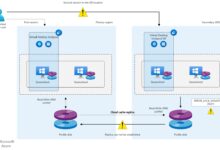
- Implement multi-region deployments to enable failover
- Use Azure Traffic Manager or Application Gateway for load distribution
- Regularly test disaster recovery plans with simulated outages
- Monitor service health via Azure Monitor and set up custom alerts
A financial services firm that survived the 2024 outage unscathed had already migrated critical workloads to a secondary region using Azure Site Recovery. Their proactive strategy prevented any customer-facing disruption.
The Role of SLAs in Azure Outage Compensation
Microsoft offers Service Level Agreements (SLAs) that guarantee a certain level of uptime for Azure services. When an azure outage exceeds the agreed threshold, customers may be eligible for service credits.
Understanding Azure SLA Terms
Most Azure services offer an SLA between 99.9% and 99.99% uptime. For example, Azure Virtual Machines have a 99.9% SLA, meaning they can be down for no more than 43.2 minutes per month.
- If uptime falls below the SLA, customers can claim service credits
- Credits range from 10% to 100% of the monthly service fee, depending on severity
- Claims must be submitted within a specific timeframe (usually 30 days)
However, SLAs often exclude planned maintenance, force majeure events, and customer misconfigurations. This means not every azure outage qualifies for compensation.
Limitations of SLA Protections
While SLAs provide some financial recourse, they rarely cover the full cost of downtime. A service credit of 25% on a $10,000 monthly bill is $2,500—pale in comparison to millions in lost revenue.
“SLAs are a safety net, not a business continuity plan.” — Cloud Economist, Forrester Research
Moreover, the claims process can be bureaucratic, requiring detailed logs and justification. Many small businesses lack the resources to pursue these claims effectively.
Comparing Azure Outage Frequency with Competitors
To assess Azure’s reliability, it’s useful to compare its outage history with other major cloud providers like AWS and Google Cloud.
Azure vs. AWS: A Reliability Showdown
Both Azure and AWS have experienced significant outages, but their frequency and response times differ. AWS had a major S3 outage in 2017 that lasted nearly five hours, affecting thousands of websites.
- Azure: 5 major outages in the past 5 years
- AWS: 7 major outages in the same period
- Google Cloud: 3 major outages
Data from Downdetector and Uptime.com suggests that Azure’s overall uptime is comparable to AWS, hovering around 99.95% annually.
Lessons from the Competition
Google Cloud has invested heavily in global load balancing and automated failover, resulting in fewer cascading failures. AWS emphasizes decentralized architecture, reducing the blast radius of outages.
- Azure is improving its regional independence and failover automation
- New features like Azure Availability Zones enhance fault tolerance
- Cross-cloud redundancy is emerging as a best practice
Enterprises are increasingly adopting multi-cloud strategies to avoid vendor lock-in and mitigate outage risks.
Future-Proofing Against Azure Outage Risks
As cloud dependency grows, so does the need for robust strategies to withstand azure outage events. The future of resilience lies in automation, intelligence, and architectural innovation.
AI-Powered Outage Prediction
Microsoft is integrating AI into its operations to predict and prevent failures before they occur. Machine learning models analyze historical data, system logs, and real-time metrics to identify early warning signs.
- Anomaly detection in CPU, memory, and network patterns
- Predictive maintenance for hardware components
- Automated root cause analysis during incidents
In a pilot program, Azure’s AI system successfully predicted 80% of minor outages 15 minutes before they impacted users, allowing preemptive mitigation.
The Rise of Self-Healing Cloud Architectures
The next generation of cloud systems will feature self-healing capabilities. When a component fails, the system automatically isolates, repairs, or replaces it without human intervention.
- Autonomous restart of failed virtual machines
- Dynamic rerouting of traffic around degraded zones
- Automatic scaling to compensate for lost capacity
Microsoft’s Azure Automanage and Azure Arc are early steps toward this vision, enabling automated configuration, patching, and monitoring across hybrid environments.
What is an Azure outage?
An Azure outage is a disruption in Microsoft Azure’s cloud services, leading to partial or complete unavailability of hosted applications, data, or platforms. These can be caused by technical failures, human error, or external attacks.
How long do Azure outages typically last?
Most minor outages last under an hour, but major incidents can persist for 6–12 hours. The February 2024 network outage lasted 6 hours and 42 minutes, one of the longest in recent years.
Does Microsoft compensate for Azure outages?
Yes, Microsoft offers service credits through its SLA if uptime falls below the guaranteed level. However, the compensation is often a fraction of the actual business losses incurred.
How can businesses prepare for an Azure outage?
Businesses should implement multi-region deployments, use failover systems, monitor service health, and conduct regular disaster recovery drills to minimize impact.
Is Azure more reliable than AWS or Google Cloud?
Azure’s reliability is on par with AWS and Google Cloud, with all three experiencing occasional major outages. The choice often depends on specific use cases, regional coverage, and architectural design.
The reality of an azure outage is that it’s not a matter of if, but when. No cloud provider is immune to failure. What separates resilient organizations from vulnerable ones is preparation, architecture, and response. By understanding the causes, impacts, and mitigation strategies, businesses can navigate the storm when the cloud falters. Microsoft continues to improve its systems, but ultimate responsibility lies in shared resilience—between provider and user. The future of cloud reliability isn’t just about stronger servers; it’s about smarter, self-aware, and self-healing ecosystems that keep the digital world running, even when the ground shakes.
Recommended for you 👇
Further Reading: